The way guests find ski resorts online is changing faster than most marketing teams are moving. Google’s AI Overviews now answer questions directly in search results — meaning your resort may not get a click even when you rank #1. The resorts that adapt their SEO strategy for this AI-first search environment now will dominate organic traffic; those that don’t will watch their website visits quietly decline while assuming rankings are fine.
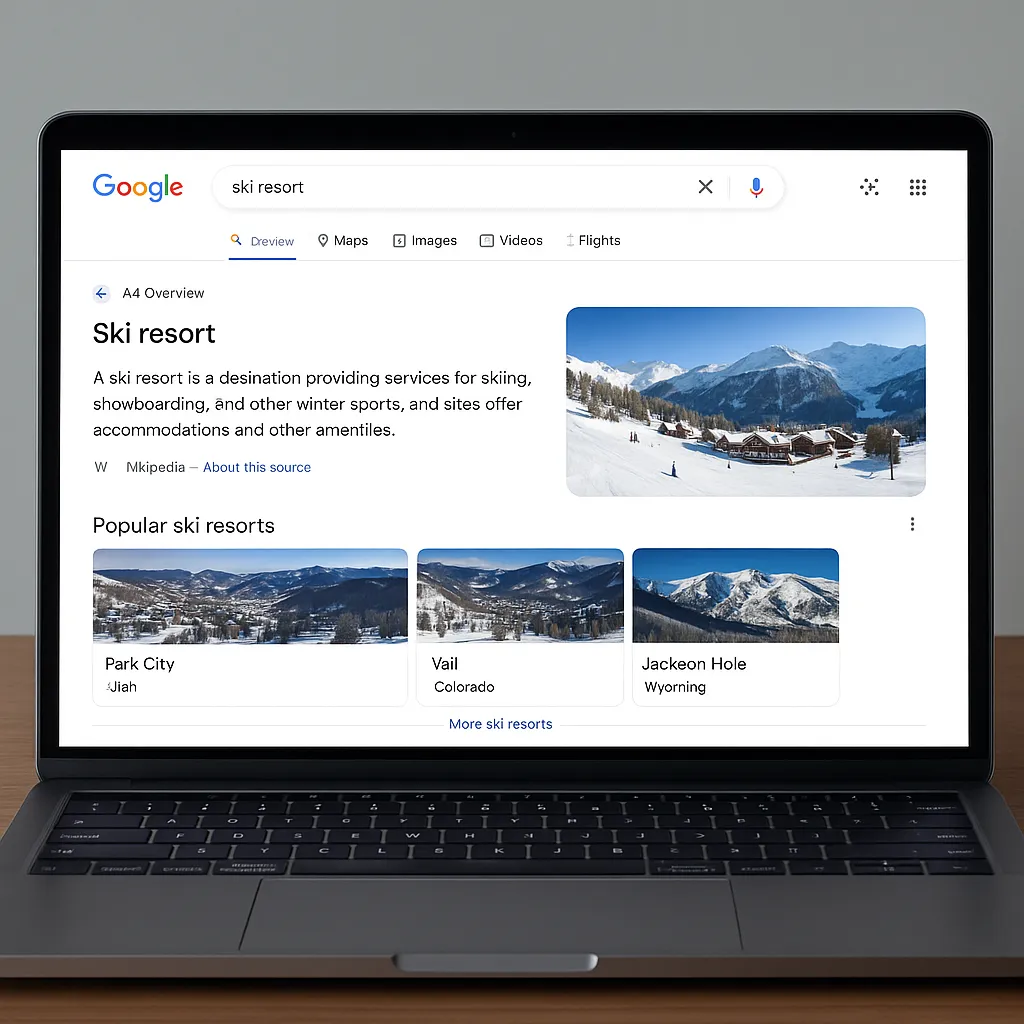
AI Overviews are changing what it means to rank #1 for resort search terms.
How AI Overviews Are Changing Resort Search
When someone searches “best beginner ski resorts in Colorado,” Google’s AI Overview may answer that question fully without the user ever clicking a link. Your page can rank #3 and generate zero traffic. The strategic response is to target the queries that AI Overviews don’t fully satisfy — highly specific, local, or time-sensitive searches like “lift ticket prices at [your resort] this weekend” or “is [your resort] good for toddlers.” These long-tail queries still drive clicks because the AI can’t answer them with confidence.
The Schema Markup You Need Right Now
Schema markup tells search engines — and AI systems — exactly what your content means. For ski resorts, three schema types are non-negotiable: LocalBusiness (your NAP, hours, geo coordinates), Event (races, festivals, clinics), and FAQPage (answer the questions your guests actually ask). FAQ schema in particular is frequently pulled directly into AI Overviews, meaning your answer can appear in the AI response even if your page doesn’t rank #1. This is one of the highest-leverage technical SEO moves available to you right now.
E-E-A-T: Why It Matters for Resorts
Google’s quality framework — Experience, Expertise, Authoritativeness, Trustworthiness — is increasingly how AI systems evaluate which sources to cite. For your resort, this means bylined content from your snow safety team, trail reports authored by your patrol director, and ski school articles signed by certified instructors. Generic blog posts written by no one about nothing are getting filtered out. Content with real human expertise attached — verifiable names, credentials, on-mountain experience — is what gets cited by AI and rewarded by Google.
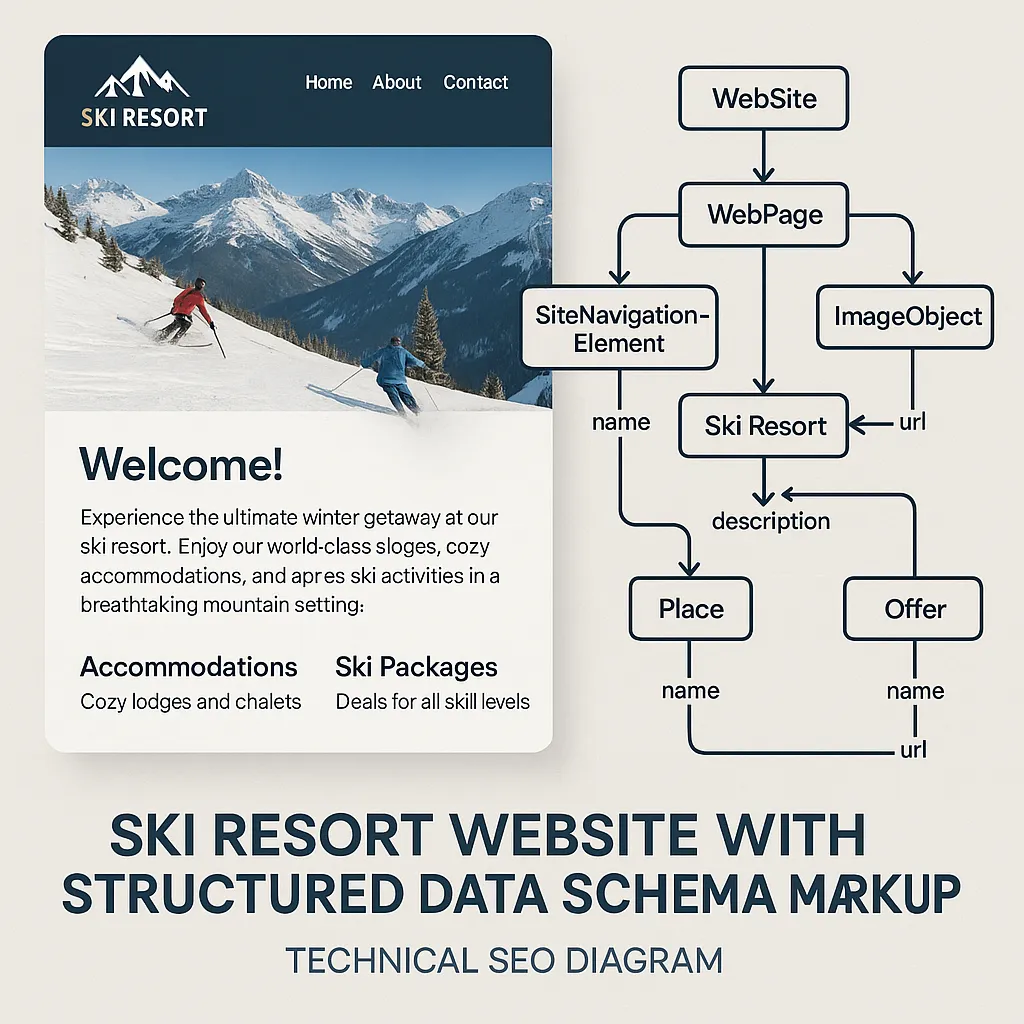
Technical signals like schema and author expertise now directly influence AI citation likelihood.
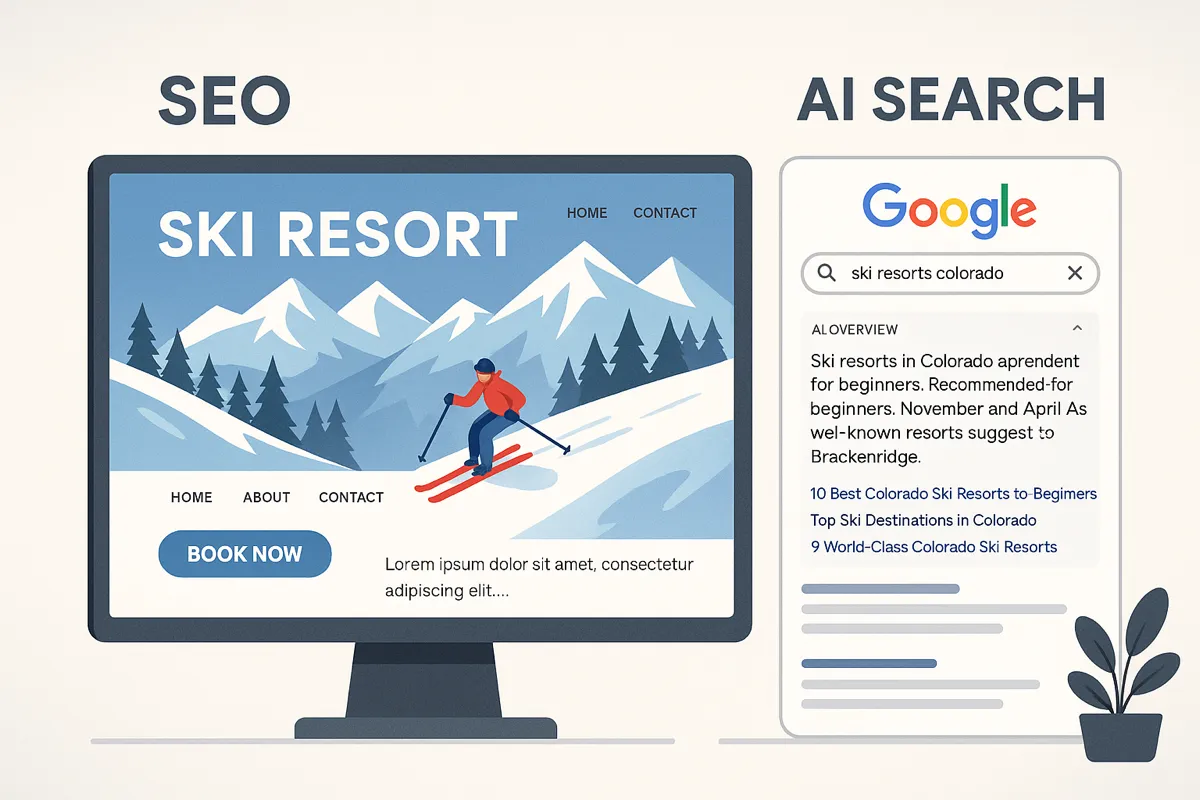
Resorts that adapt to AI search now will compound their organic advantage over the next two seasons.
Three Things to Do This Week
First, add FAQ schema to your five most-visited pages — lift tickets, trail maps, ski school, lodging, and getting here. Second, audit your top 10 blog posts and add a real author bio with credentials to each. Third, pull your Search Console data and identify which queries are losing click-through rate — those are the positions where AI Overviews are intercepting your traffic, and they need a content strategy response. These three moves take under four hours combined and create compounding returns.