I got an email last week from a resort marketing director I know. She manages social, email, the website, and season pass campaigns — solo. Her team of three became a team of one after the offseason cuts. Her message was three words: “How do you keep up?”
Honestly? I don’t keep up. I use AI agent skills to do it for me.
And dude, if you’re still grinding through every task manually in 2026, it’s time to talk about what’s actually available to you right now.

The stoke of a well-dialed AI workflow: more mountain time, less inbox time.
What Is an AI Agent Skill, Actually?
Think of it this way: a regular AI prompt is a single chair. An AI agent skill is a whole lift system.
A skill is a pre-built, reusable AI workflow that knows your context, your tools, and your goals — and executes a whole chain of tasks without you managing every step. You tell it what outcome you want. It figures out how to get there.
Real example: instead of manually researching ski news, writing a post, generating images, formatting everything, and uploading it to WordPress — a single agent skill does all of that in sequence, every morning, before you’ve finished your first cup of coffee. That’s not theoretical. That’s running right now on this site.
Why Most Resort Teams Are Still Sleeping on This
Here’s the gnarly truth: most resort marketing teams are using AI like a slightly smarter search engine. They type a question, get an answer, copy-paste it somewhere. Repeat. That’s fine — but it’s barely scratching the surface.
The teams pulling ahead right now have figured out that AI isn’t just a faster way to write. It’s a way to completely restructure what one person can manage. Powder day alert goes out automatically the morning after a storm. Social content for the week gets drafted and queued on Monday. Guest feedback from surveys gets analyzed and summarized before your Tuesday ops meeting.
None of that requires a developer. It requires knowing which skills to use and how to set them up.
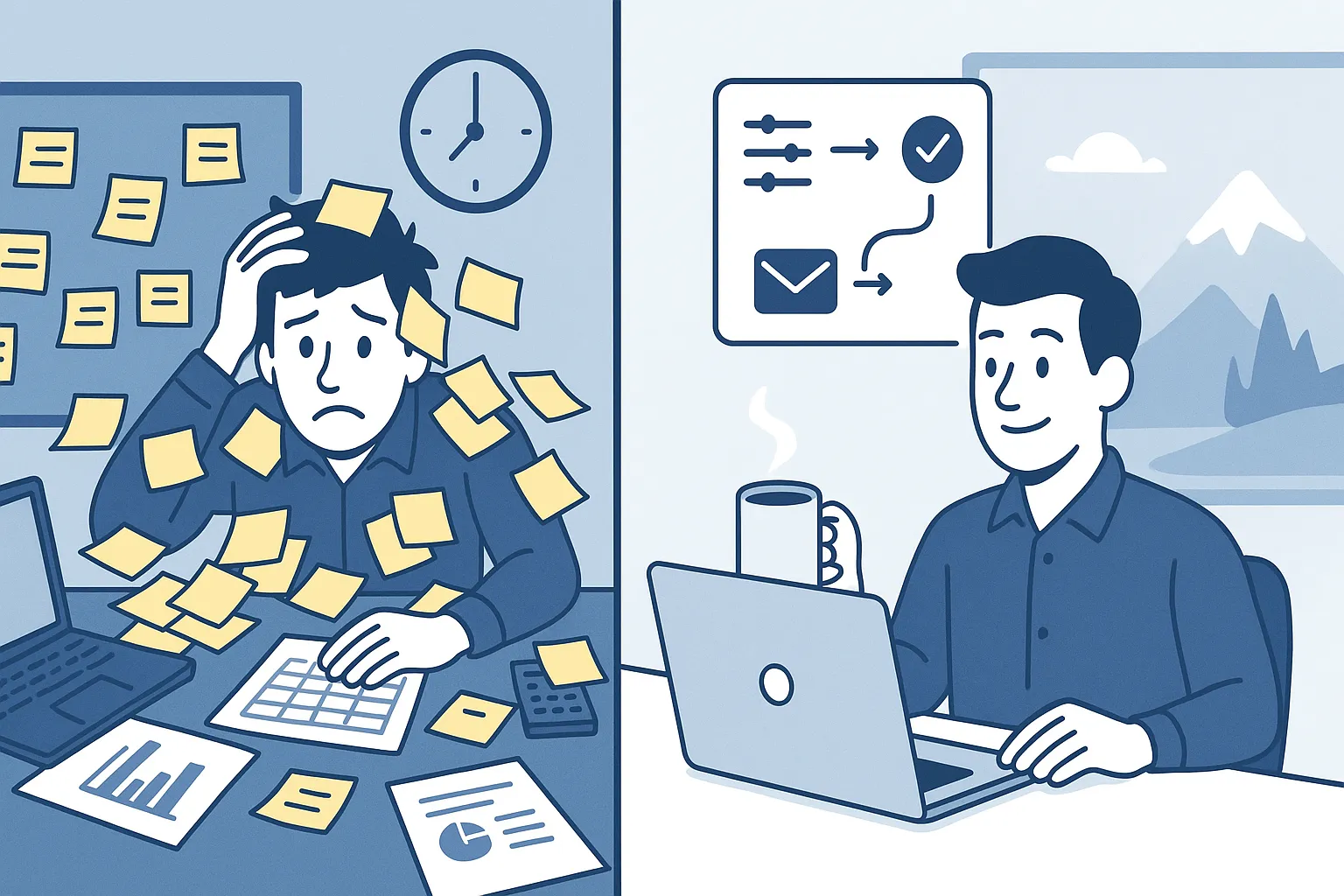
Before: buried in tabs. After: dialed workflow, same outcomes, half the hours.
Three Agent Skills Worth Implementing This Week
1. Content pipeline skill. Monitors ski news sources daily, drafts a post in your voice, generates images, and queues it as a draft for your review. You approve or edit — you don’t start from scratch. Time saved: 2-3 hours per post.
2. Powder day alert skill. Watches weather data for your mountain. When snowfall crosses your threshold — 6 inches, 12 inches, whatever your magic number is — it drafts and sends your powder day email and social posts automatically. Your guests get the alert before they check the snow report themselves.
3. Guest feedback loop skill. Pulls survey responses or reviews, runs sentiment analysis, and delivers a weekly summary to your inbox every Monday morning. No more wading through 200 comment cards before a team meeting.
These aren’t expensive. Most of them run on tools your resort probably already has access to — ChatGPT, Claude, Zapier, Google Sheets. The gap isn’t budget. It’s knowing they’re possible.
The Part Nobody Talks About
The real value of agent skills isn’t the time saved on any single task. It’s what you do with that time instead.
My friend — the one-person marketing team — she’s not going to use her extra hours to write more emails. She’s going to use them to actually get on the mountain. To talk to guests. To find the stories that no AI can generate because they haven’t happened yet.
That’s what I keep coming back to. The resorts that win at marketing aren’t the ones with the biggest budgets or the most staff. They’re the ones with the most authentic connection to their mountain and their community. AI agent skills don’t replace that. They protect it — by getting the mechanical stuff out of the way so the human stuff can actually happen.
Is your resort already using any AI workflows, or are you still copy-pasting from ChatGPT and calling it a strategy? I’d genuinely love to hear where you’re at — and what’s actually working.
Want a custom AI workflow built for your resort’s marketing team? That’s exactly what the AI Audit is for →