Why a ski resort CEO needs a chief of staff bot
A ski resort CEO does not need more noise. They need a system that turns weather, operations, sales, staffing, and meetings into clear next actions. That is what an AI chief of staff agent can do if you design it the right way. The goal is not to replace judgment, it is to make sure important things do not get lost between inboxes, calendars, and dashboards.

A good chief of staff bot starts by reducing noise and surfacing priorities.
What the bot should actually do
- Send a morning brief with weather, ops, staffing, and revenue highlights.
- Summarize meetings and email threads into clear action items.
- Track follow-ups, deadlines, and owner assignments.
- Flag weather shocks, capacity issues, and ticketing anomalies.
- Keep project decisions and context in memory.
- Route tasks to the right person, but only with approval when needed.
Tools I’d use
- Claude or OpenAI, for reasoning and summarization.
- MCP or tool-calling, so the agent can use real tools safely.
- Python or TypeScript, for the agent backend and workflows.
- Supabase/Postgres, for memory, logs, and structured resort data.
- n8n, cron, or a queue worker, for scheduled jobs.
- Calendar, email, weather, ticketing, and ops APIs, for real context.
- A lightweight web UI, for approvals and scenario changes.
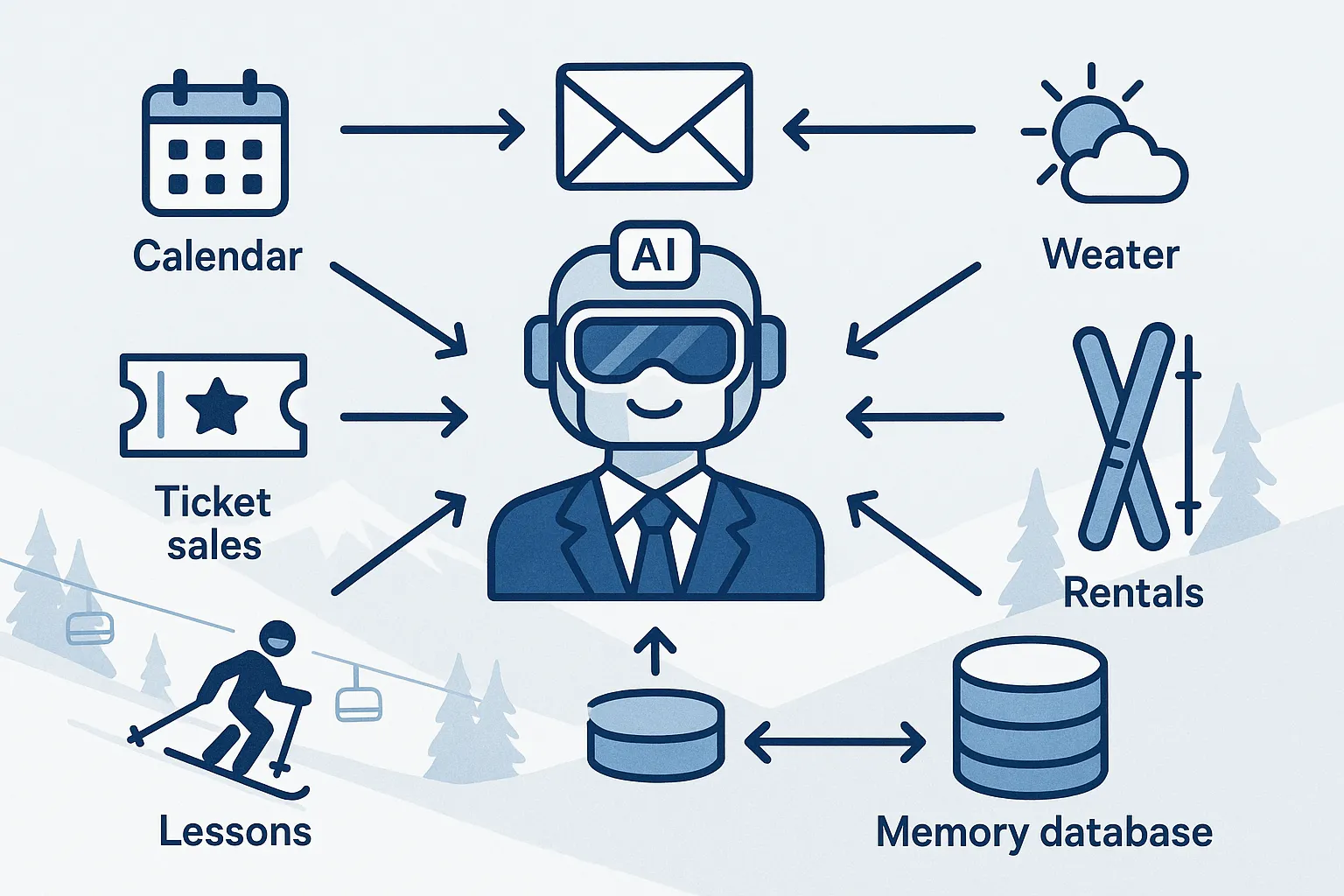
The agent should be a system of tools, memory, and approvals, not just a chat box.
The architecture
I would build it in six layers:
- Inputs, emails, calendar, weather, ops, sales, and project data.
- Memory, a structured store of decisions, tasks, and important context.
- Reasoning, the model that summarizes, ranks, and predicts what matters.
- Actions, create tasks, draft notes, send summaries, prepare follow-ups.
- Approval layer, anything sensitive waits for a human yes.
- Audit log, every important action is recorded and reversible.
Simple system prompt idea
You are the chief of staff for a ski resort CEO.
Your job is to reduce noise, surface risks, and keep priorities moving.
Always summarize the day in plain English.
Always flag weather, operations, revenue, and staffing issues.
Never take sensitive actions without approval.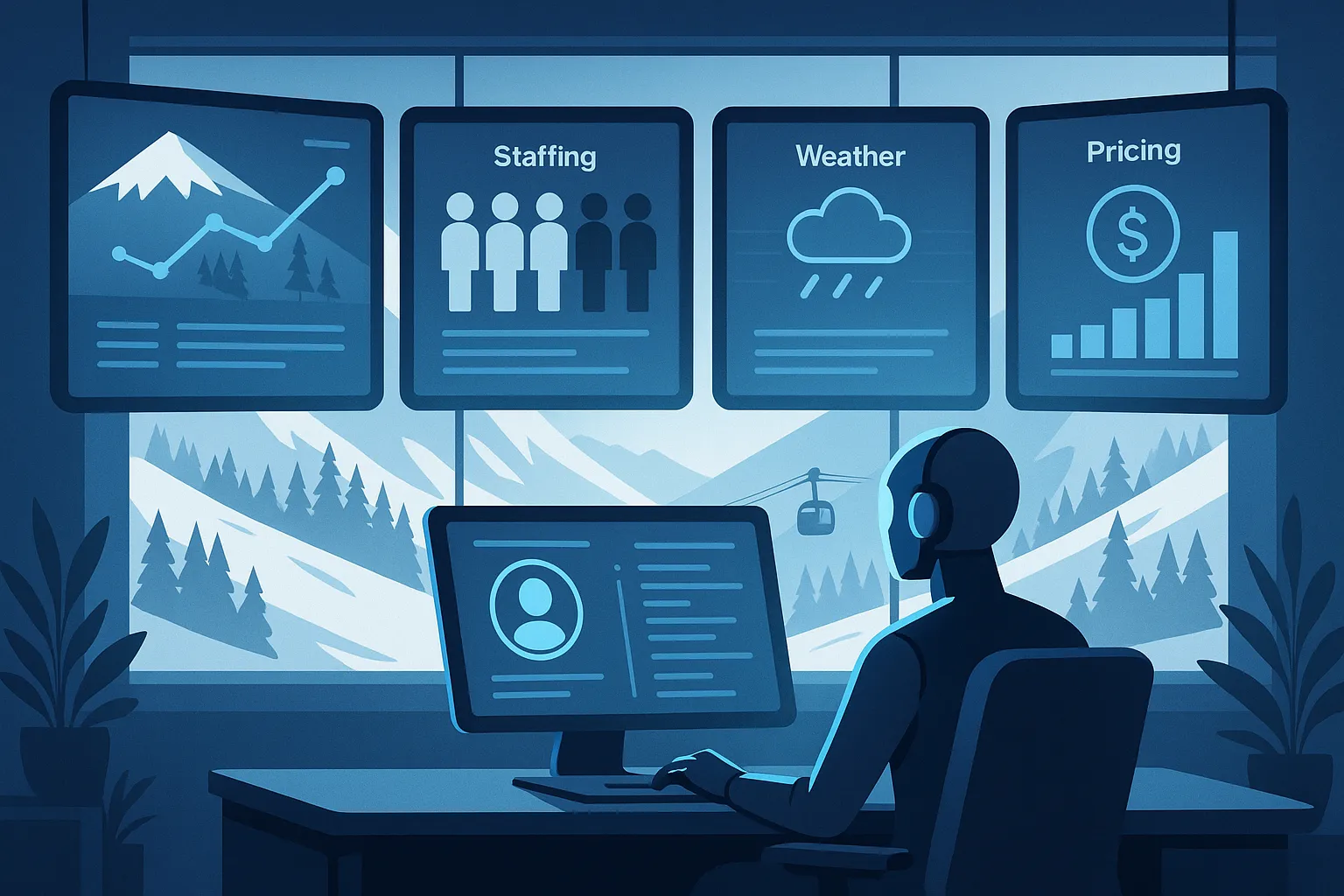
The command center view should make the resort feel easier to run.
How I would build it step by step
- List the top 10 CEO tasks. If it does not save time or reduce risk, skip it.
- Connect read-only data first. Weather, calendar, email, sales, and ops signals.
- Build the daily brief. This is the first high-value output.
- Add task routing. The bot can draft follow-ups and assign owners.
- Add approval controls. No risky messages or changes go out automatically.
- Teach the bot memory. Save decisions, preferences, and recurring issues.
- Test on one resort. Use real examples before scaling to everything.
What it should help with in a resort business
- Morning weather and ops briefings
- Pricing and capacity watchouts
- Staffing and hiring follow-ups
- Vendor and project management
- Pass sales and campaign summaries
- Meeting notes and decision tracking
What not to automate first
- Do not let the bot send staff messages without review.
- Do not let it change pricing automatically.
- Do not let it make destructive calendar or CRM actions by itself.
- Do not skip logging, audits, or approvals.
Final thought
The best AI chief of staff bot is not flashy. It is useful, calm, and hard to break. For a ski resort CEO, that means better briefs, cleaner follow-ups, fewer dropped balls, and a system that remembers the decisions that matter. Start read-only, add approvals, and let the agent earn trust one task at a time.