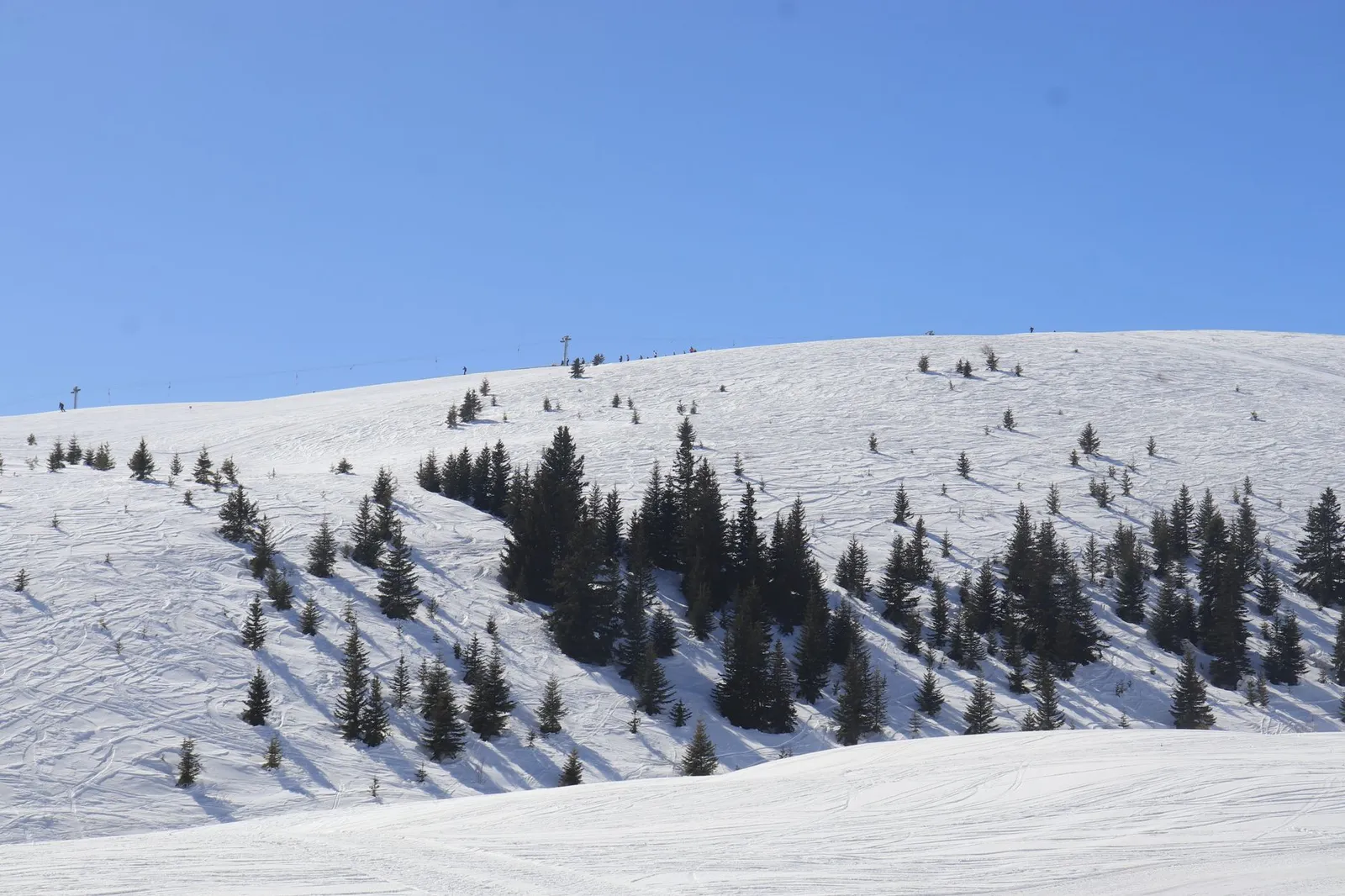
It’s 11 a.m. on a December Saturday, 7.8 miles up a canyon road in central Utah. A dad pulls leather work gloves over his kid’s mittens, because the rope tow eats cloth gloves for breakfast. The kid rides free. Dad pays $20.
That is the whole business model at Snowland, the Fairview Canyon hill that reopened last winter after sitting closed to the public for 46 years. And it just got more interesting.
What changed this fall
When the nonprofit Snowland Foundation launched the revival, it told reporters it would not charge for lift tickets until the 2027–28 season, per TownLift’s 2025 coverage. Free was the whole hook.
Now the hill’s own site lists 2026–27 all-day tickets at $20 for ages 13 and up, with kids 12 and under free and tickets releasing around December 1. FOX 13 reports the same pricing, plus a 40-year special use permit from the Manti-La Sal National Forest and a 2,450-foot Doppelmayr surface lift, the Ridgeline Express, that opens up about 107 acres.
POWDER ran the trail map with the headline everyone clicked: $20 tickets, among the cheapest in the state. The site now shows 12 named runs and two lifts.
Free was a launch tactic, not a price
I like this move. Free bought Snowland a season of headlines, goodwill and proof that people would drive up the canyon. But free also attracts the wrong expectations, and it pays for nothing.
$20 does three jobs at once. It funds the snack bar and the snowcat fuel. It puts a value on the experience. And it creates a transaction, which means a ticket record, which means you finally know who showed up.
The kids-free rule is the sharp part. The adult is the one holding the car keys and the credit card. Charge the decision-maker a small number, wave the kid through, and you have built a family habit for the price of a burger.
The honest-ops playbook
Here’s what most operators skim past. Snowland’s website is brutally clear about what it is not.
| What Snowland tells guests | Why it works |
|---|---|
| Open select days, 11 a.m.–4 p.m. | Staffing matches demand, not ego |
| No rentals on site | Sets expectations before the drive |
| Leather or rubber work gloves required | Fewer complaints at the tow |
| Limited parking, carpool with three or more | Turns a constraint into a rule |
FOX 13 puts expected capacity at 200 to 250 skiers a day, and foundation chair Brent Lange calls it “the little engine that could.” Kevin Christensen of Sanpete County Travel and Tourism said it plainly: “Snowland is not intended to be a big mega resort.”
That clarity is a marketing asset. The fastest way to earn a one-star review is to let a guest discover a limitation in the parking lot.
What this means for the rest of us
If you run a small hill, Snowland is a live case study in pricing your way out of free without burning the community. Announce the change early, keep kids free, and tie the new price to something visible, like a new lift.
If you run a big mountain, look at who Snowland is courting. FOX 13 reports the county expects families from Provo and Spanish Fork, about an hour away. Those are tomorrow’s pass buyers learning to ski on a $20 day.
Is that a threat or a feeder system? I’d call it a feeder system that teaches your future guests to ski for twenty bucks, one rope-tow lap at a time.
What I’d do Monday
- Write down your own “what we are not” list and put it on the ticket page.
- Check whether your kids pricing targets the kid or the person paying.
- If anything on your mountain is free, decide what it is buying you, and for how long.
Snowland didn’t lose its edge by charging. It found one: free is a launch move, and a fair price is a long-term one. What’s the one thing on your mountain you’re still giving away that guests would happily pay $20 for?