Picture a bare dirt tubing hill on Donner Summit in October. It’s 60 degrees, the sun is out, and a shipping container is piling snow onto the slope anyway.
That’s what Sugar Bowl showed off this month with its new TechnoAlpin SnowFactory, ahead of a Halloween tubing event. Over the hill, Mt. Rose fired up conventional guns in the first real cold snap. And in Colorado, Aspen Snowmass pulled insulated blankets off snow it saved from last winter.
Three resorts, three completely different answers to the same question: where does early snow come from when the sky won’t cooperate? I think that question just turned into a tech-stack decision.
Three snow sources, three different physics
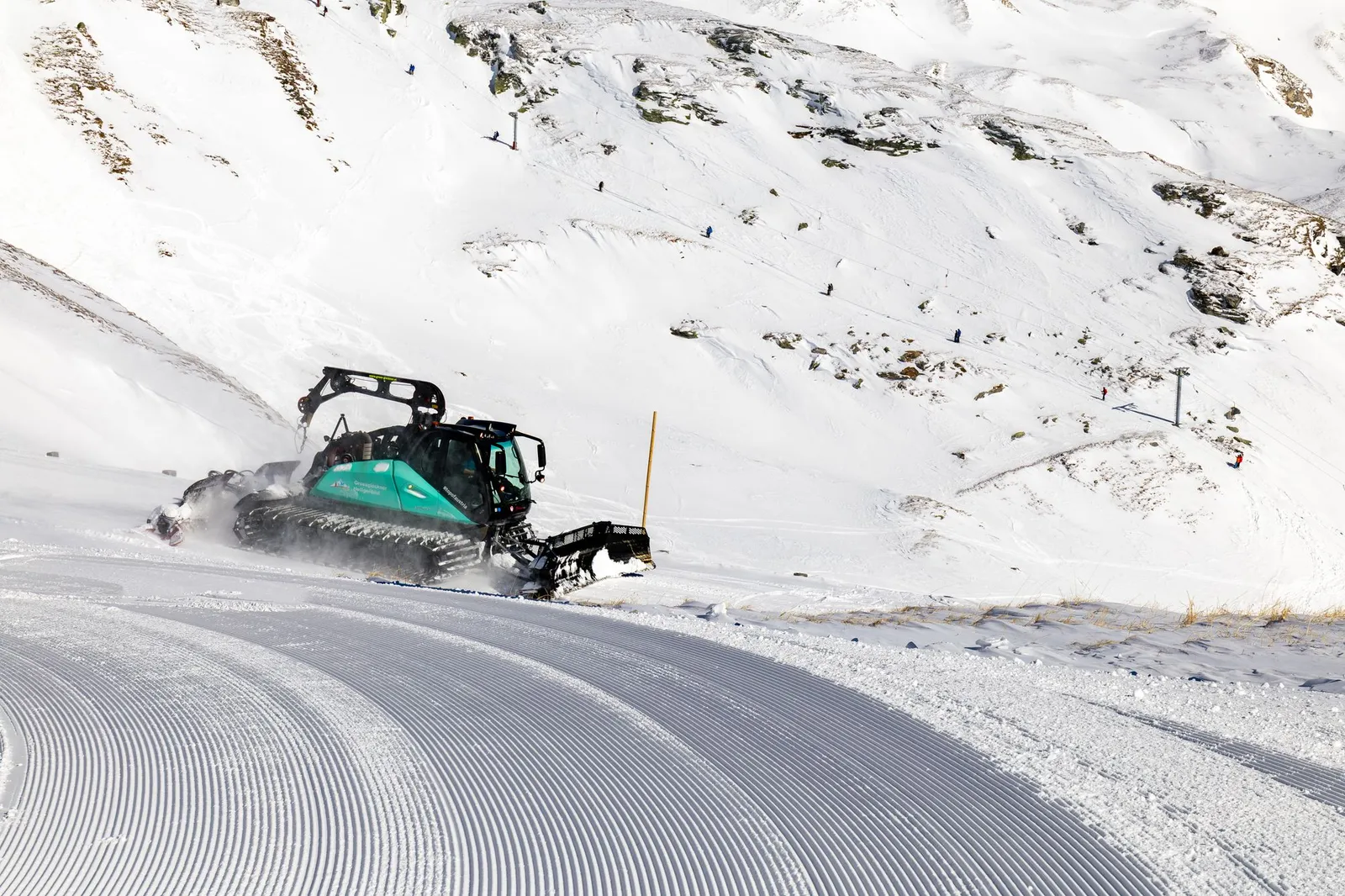
Conventional guns still do the heavy lifting. They need below-freezing air, low humidity, and ideally more than four hours of it, per South Tahoe Now’s reporting on Mt. Rose. Mt. Rose is first in Tahoe this season, aiming for a Nov. 6 opening after putting about $2 million into improvements, roughly half of it snowmaking. Last season it targeted Nov. 8 and didn’t open until Nov. 21. That gap is the weather’s veto in action.
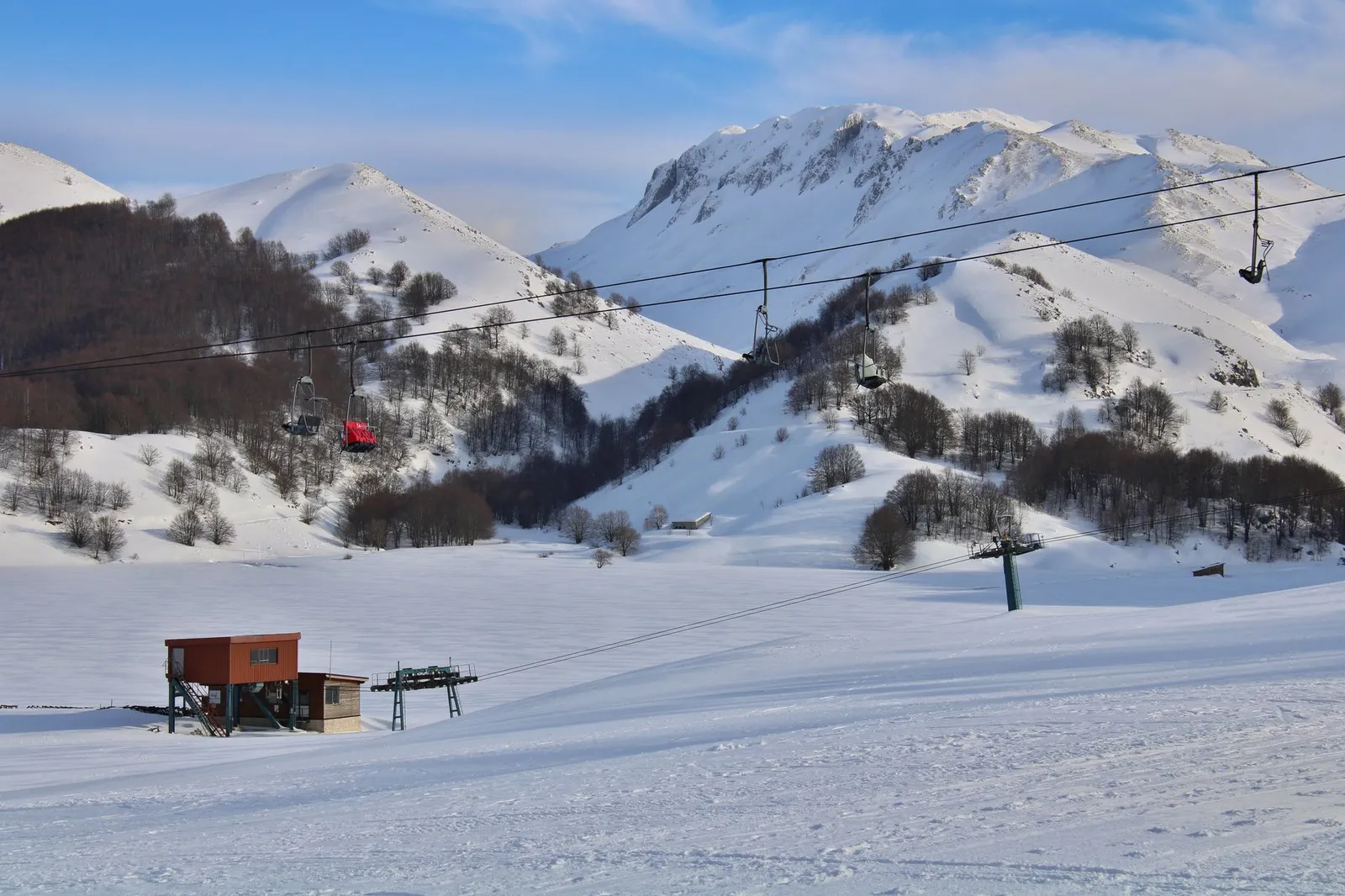
Stored snow is last winter’s snow, kept alive under insulation. In the Snow Secure release, drone measurements on Aug. 31 showed 85% of the volume still there. The snow surface held at 33.6°F while the top of the mats averaged 61.8°F and peaked at 118°F. The Colorado Sun reported about 85% at Snowmass and 84% at Buttermilk, and the resort says it has already bought more blankets.
The low-tech version works too. Trollhaugen in Dresser, Wisconsin, ran its 21st Open Haugen weekend on Oct. 3 and 4, with skiing and riding from 11 a.m. to 4 p.m. both days. SnowBrains reports the leftover snow gets pushed into one pile at the end of winter, covered with straw and then a tarp, and sits there about six months. Trollhaugen estimates it keeps 70-75% of it. That’s an estimate, not a drone survey like Aspen’s, but it shows the gap between a straw-and-tarp pile and engineered mats can be smaller than you’d guess.
The part I’d steal is the marketing. Registration for the snow sessions opened Sept. 17 and sold out in under five hours, which Fox 9 reported Trollhaugen called an all-time record. Last winter’s leftover snow became a sold-out calendar product.
Snow factories ignore the weather entirely. TechnoAlpin says its units chill water with a heat exchanger in a closed circuit, no additives, and rates its Polar and Arctic models up to 77°F ambient. The catch is volume: the compact Tundra makes about 70 cubic meters a day, and the biggest installations top out around 1,000. Sugar Bowl hasn’t said whether it will use the machine on ski trails.
| Snow source | Needs cold? | Best job | The catch |
|---|---|---|---|
| Fan/lance guns | Cold + dry | Opening-day volume | Weather veto |
| Stored snow | Only last winter | Rail park, one key run | Plan it in spring |
| Snow factory | Nope | Tubing, events, small zones | Low daily output |
Where the smarts actually earn their keep
Once you have more than one source, early season becomes a scheduling puzzle. Which terrain gets which snow, on which date, at what energy and water cost? That’s the same kind of problem automation is good at: juggling a forecast, a price and a deadline, then picking the cheapest way to hit the date.
I wouldn’t buy software for this yet, honestly. A dialed spreadsheet with your forecast, your power rates and your must-hit dates gets you most of the way, and an AI assistant can help you build it in an afternoon. We covered the energy side in the indoor snowmaking cost breakdown and the storage side in the Burke snow-farming piece.
Which piece of your terrain would you guarantee first if you could?
Let’s not snow around it: the real win is a date
Here’s the angle I think gets missed. None of these tools matters most for opening day. They matter because they let you sell something on a fixed date.
Aspen used stored snow for an early October rail park. Sugar Bowl is selling a Halloween tubing session at $25. Those aren’t “opening day, conditions permitting” promises. They’re calendar products, and calendar products are a marketer’s dream: you can pre-sell them, build a campaign around them, and get the stoke going while everyone else is posting “we’re waiting on Mother Nature.”
What I’d do Monday:
- Pull your last five opening dates and note how far each slipped from the target.
- Pick one small zone (tubing, a rail park, a kids’ area) that would sell on a fixed date.
- Ask vendors for energy per cubic meter in writing. TechnoAlpin’s product page publishes no numbers.
- If storage interests you, put the decision on the March agenda, not October’s. That’s when the snow is there to save.
The thermometer used to have veto power over your October. Now it just gets a vote. If you knew you’d have snow on one guaranteed date this fall, what would you sell?